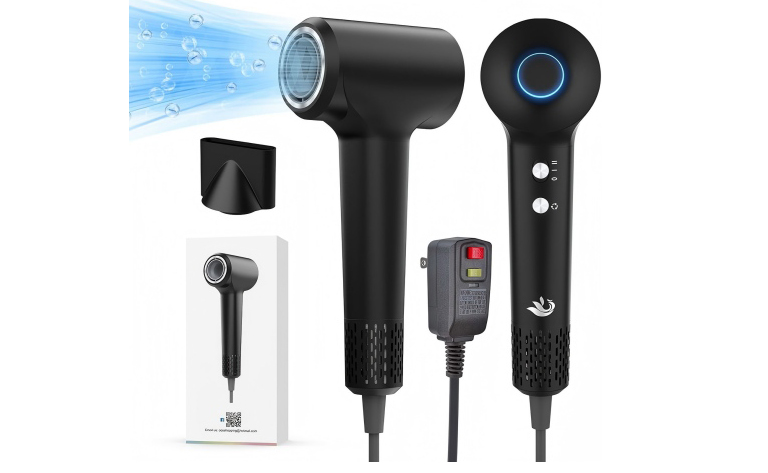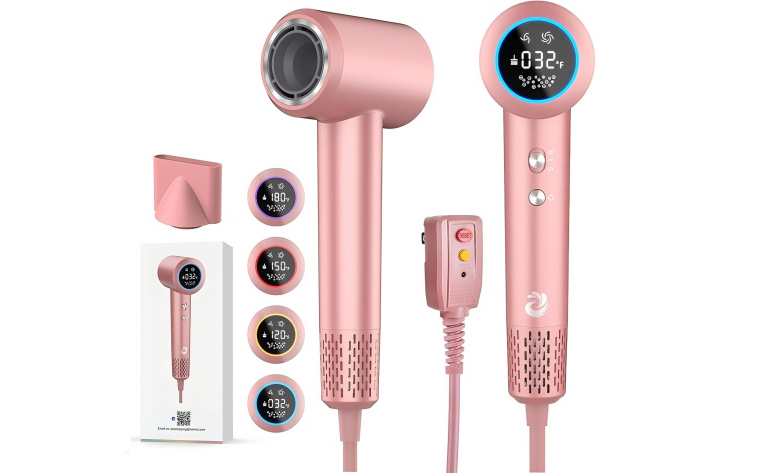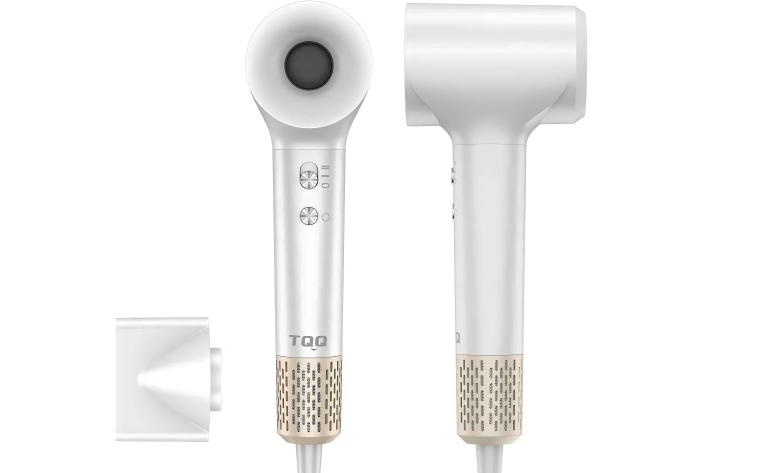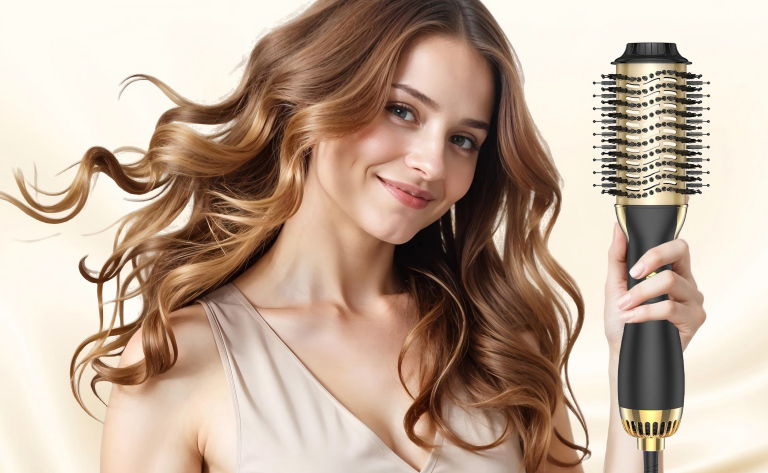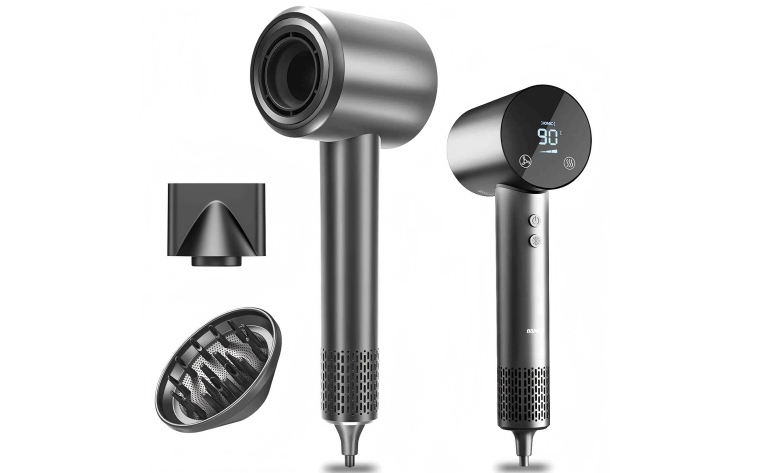
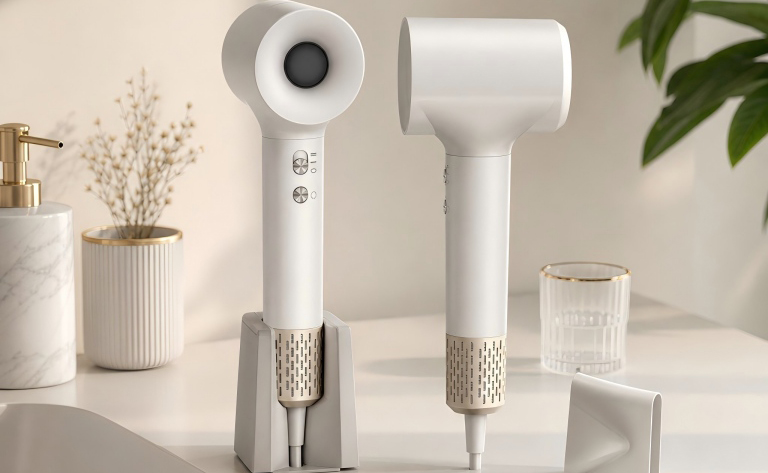
At first glance, an ion hair dryer may not look very different from a conventional hair dryer. Both use airflow and heat to dry hair. The main difference is what happens to the air during the drying process.
An ion hair dryer uses an ion-generating system to introduce negative ions into the airflow. This gives the product a different positioning from a standard dryer and has become an important feature for many personal-care brands.
For buyers sourcing hair dryers for retail, private label, or OEM projects, understanding this difference helps when choosing the right product configuration.
💨 How Does an Ion Hair Dryer Work?
A conventional hair dryer mainly relies on a motor, fan, heating element, and airflow system to remove moisture from the hair.
An ion hair dryer adds an ion generator to this basic structure. The generator produces negative ions that are carried into the airflow.
The purpose is not simply to add another component. Ion technology is commonly used to improve the overall styling experience by helping reduce static and leaving hair feeling smoother after drying.
The actual result depends on the ion system, airflow, heat control, motor performance, and overall product design. This is why buyers should evaluate the complete dryer rather than treating ion technology as a standalone feature.

⚡ Ion Hair Dryer vs. Conventional Hair Dryer
The difference becomes clearer when looking at the product from a manufacturing and product-development perspective.
| Feature | Ion Hair Dryer | Conventional Hair Dryer |
|---|---|---|
| Ion technology | Negative-ion generator | Usually not included |
| Static control | Designed to help reduce static | Mainly depends on airflow and styling |
| Product positioning | More feature-oriented | Basic drying function |
| Target market | Beauty, premium, and personal-care products | General everyday use |
| Customization potential | Ion system can be integrated into product design | Simpler configuration |
This does not mean that every ion hair dryer will perform better in every situation. Motor power, temperature stability, airflow, nozzle design, ergonomics, and component quality still have a major impact on the finished product.
🔧 What Should Buyers Consider?
For brands working with an ion hair dryer manufacturer, the ion generator is only one part of the product specification.
It is worth looking at:
- Motor and airflow performance
- Heating and temperature control
- Ion generation system
- Noise level
- Weight and ergonomics
- Safety protection
- Housing materials
- Available attachments
- Packaging and private-label options
These details can affect both product performance and manufacturing cost.
For OEM projects, brands may also want to adjust the product appearance, color, controls, accessories, or packaging to match their target market.

🏭 Why Does the Manufacturer Matter?
Developing an ion hair dryer requires coordination between electrical components, airflow, heating, control systems, and product structure.
An experienced hair dryer manufacturer can help buyers evaluate these elements together instead of simply adding an ion generator to an existing design.
For brands looking for OEM hair dryer manufacturing, this can make product development more practical. The manufacturer can also help determine which specifications are worth keeping when the product needs to balance performance, cost, and retail positioning.
About Huiyang
As a hair dryer manufacturer, Huiyang supports product development and manufacturing for brands looking to build hair-care products for different markets.
For an ion hair dryer project, the focus goes beyond the ion function itself. Product structure, airflow, heating, controls, appearance, and customization all need to work together.
This makes it possible for brands to develop an ion hair dryer that fits their target market rather than simply adding a popular feature to a standard model.

Final Thoughts
The main difference between an ion hair dryer and a conventional hair dryer is the addition of ion technology, but the real product experience depends on much more than that one feature.
For buyers, the better approach is to evaluate the complete product: airflow, heat control, motor, ion system, safety, design, and customization options. When these elements are properly matched, an ion hair dryer can become a more differentiated product for beauty and personal-care markets.