A hair dryer is no longer just a device that blows hot air. As consumers pay more attention to hair condition, drying time, heat exposure, and styling results, manufacturers are putting more technology into a product that was once relatively simple.
But adding sensors, digital controls, or multiple settings does not automatically make a hair dryer better. The real challenge for a smart hair dryer manufacturer is turning technology into something users can actually feel: more controlled heat, more consistent airflow, faster drying, and less unnecessary stress on the hair.
That is where product engineering becomes more important than the number of features listed on the box.
Better Hair Care Starts With Better Heat Control
Heat is one of the most important factors in hair drying. High temperatures can speed up drying, but excessive or poorly controlled heat can make the hair feel dry and may contribute to damage over repeated use.
A smart hair dryer can approach this problem through more precise temperature management. Instead of relying on a single high-heat setting, the dryer can regulate temperature and airflow according to different drying or styling needs.
For a smart hair dryer manufacturer, the goal is not simply to make the heater hotter. It is to create a more controlled relationship between temperature, airflow, and drying time. This is an important difference between adding technology and using technology effectively.

Airflow Determines More Than Drying Speed
Motor performance is another fundamental part of a hair dryer’s design. The motor determines how effectively air can be moved through the system, while the internal air path, heating structure, and nozzle design influence how that airflow reaches the hair.
A strong airflow can reduce drying time, but maximum airflow is not necessarily the best solution for every user. Fine hair, thick hair, damp roots, and styling work can require different combinations of air volume and temperature.
This is why an experienced hair dryer manufacturer needs to consider the entire airflow system rather than focusing on motor power alone. The best result comes from matching airflow characteristics with the way the product is actually used.
What Makes a Hair Dryer “Smart”?
The word “smart” can mean different things depending on the product.
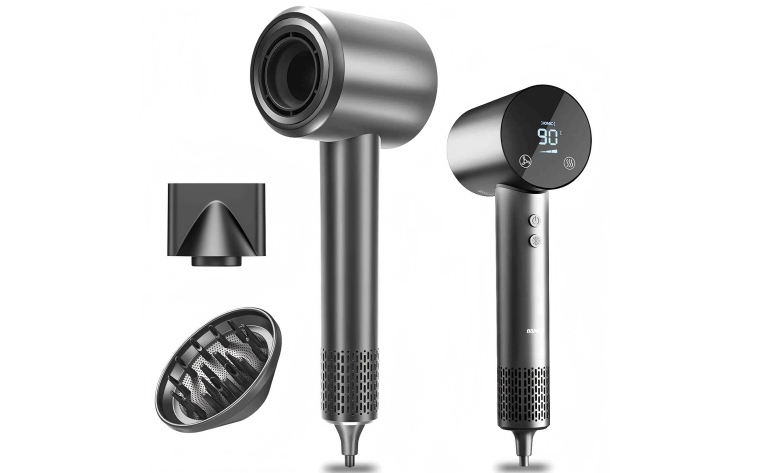
In a basic sense, a smart hair dryer may use electronic controls to provide more precise temperature and speed adjustment. More advanced products can incorporate sensors or intelligent control systems to monitor operating conditions and adjust performance accordingly.
The purpose of these technologies should be practical. A user should not have to think about complex settings every time they dry their hair. Good smart technology works quietly in the background, helping maintain more consistent conditions while leaving the user in control.

Temperature and Airflow Need to Work Together
One of the biggest mistakes in hair dryer design is treating heat and airflow as separate functions.
If the temperature is high but airflow is insufficient, heat can remain concentrated around the hair. If airflow is strong but temperature control is poor, the drying experience may become uncomfortable or inefficient.
A well-designed smart hair dryer therefore needs to coordinate these two variables.
For example, a manufacturer may develop different operating modes for fast drying, gentle drying, or styling. Each mode can combine a particular temperature and airflow profile rather than simply changing one setting.
This approach makes technology more meaningful because it is connected to a specific user need.
Compact Design Requires More Engineering
Consumers increasingly want hair dryers that are powerful without being unnecessarily large or heavy. That creates another engineering challenge for manufacturers.
A compact housing has less internal space for the motor, heating elements, control components, airflow channels, and thermal protection system. These components need to work together without creating excessive heat or noise.
For an OEM hair dryer manufacturer, this becomes particularly important because brands may have their own requirements for size, appearance, weight, controls, and performance.
A successful design is therefore not simply about fitting more technology into a smaller housing. It is about making the internal system work efficiently within the available space.
Safety Has to Be Designed Into the Product
Hair dryers operate close to the user’s head and hair, so safety cannot be treated as an optional feature.
Temperature control, overheating protection, electrical protection, motor reliability, and structural design all contribute to safe operation. The specific requirements also depend on the target market and applicable regulations.
For a professional smart hair dryer manufacturer, quality control should extend throughout the production process. Components need to meet defined specifications, and finished products need appropriate testing before they reach consumers.
A smart function is only valuable when the underlying hardware is reliable.
Technology Should Improve the User Experience
There is a tendency in consumer electronics to add functions simply because they are technically possible. Hair dryers are no exception.
However, users do not necessarily need more buttons or complicated controls. They need a product that dries hair efficiently, feels comfortable in the hand, provides predictable results, and fits naturally into their routine.
This is where product development becomes important.
A manufacturer needs to understand how consumers actually use the product and then decide which technologies are worth integrating. Intelligent temperature control, multiple airflow modes, lightweight construction, and ergonomic controls can all have value when they solve real problems.
The technology should serve the experience, not the other way around.

Why OEM and ODM Capability Matters
For brands entering the hair care market, choosing a manufacturer involves more than checking whether a factory can produce a standard hair dryer.
An OEM hair dryer project may require customized colors, housing designs, logos, packaging, control systems, or performance specifications. An ODM project may go further, with the manufacturer contributing to product architecture, industrial design, electronics, and functional development.
This is why manufacturing capability and product development experience matter.
A capable smart hair dryer supplier should be able to connect product requirements with engineering decisions and then translate those decisions into consistent mass production.
What Should Brands Look for in a Smart Hair Dryer Manufacturer?
The right manufacturer should be evaluated from several angles rather than based only on product appearance.
| Factor | Why It Matters |
|---|---|
| R&D capability | Supports product development and technical customization |
| Motor and airflow engineering | Influences drying efficiency and user experience |
| Temperature control | Helps manage heat during different drying modes |
| Product safety | Supports reliable operation and market compliance |
| OEM/ODM capability | Allows products to be adapted to brand requirements |
| Quality control | Helps maintain consistency during mass production |
| Production capacity | Important for stable supply and larger orders |
| Design capability | Helps combine appearance, ergonomics, and internal structure |
These factors become especially important when a brand plans to build a long-term product line rather than purchase a one-time batch of standard products.
How Huiyang Approaches Smart Hair Dryer Manufacturing
Huiyang focuses on developing hair care products around the relationship between technology, usability, and product design.
For Huiyang, a smart hair dryer manufacturer should not define innovation simply by the number of electronic functions included in a product. The more important question is whether those technologies improve drying control, comfort, efficiency, and everyday usability.
From product development to manufacturing, the objective is to create hair dryers that combine practical performance with a design suitable for modern personal care products.
For brands looking for smart hair dryer OEM or ODM solutions, this approach also provides a foundation for developing products around different market requirements rather than relying on a single standard configuration.
Technology Has Value When Users Can Feel the Difference
The future of hair dryers is not necessarily about adding more technology. It is about using technology more intelligently.
Better temperature control can help manage heat exposure. More refined airflow can improve drying efficiency. Smarter controls can simplify operation. Better engineering can make powerful products lighter, quieter, and easier to handle.
That is ultimately how a smart hair dryer manufacturer turns technology into better hair care: not by putting more functions into the product, but by using engineering to solve problems that users actually experience.
For brands, the right manufacturing partner is therefore one that understands both sides of the equation — the technology behind the product and the everyday experience it is designed to deliver.