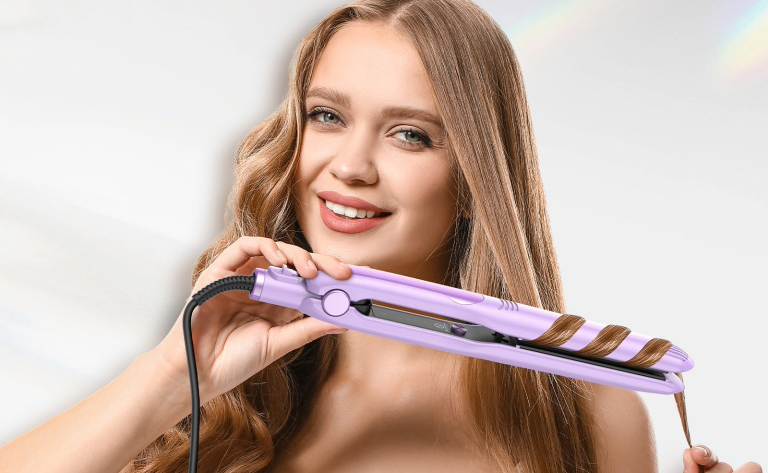
A straightening iron may look like a simple styling tool, but its performance depends on several details working together. Heating speed, temperature control, plate material, product structure, and ease of use can all affect the final styling result. For brands and distributors, these details also influence how a product performs in the market and how customers evaluate its quality.
A well-designed straightening iron should provide stable heat, smooth contact with the hair, and enough temperature flexibility for different styling needs. It should also use reliable materials and electrical components to support consistent operation over time.
For manufacturers such as Huiyang, product development starts with these practical requirements. By combining ceramic heating technology, temperature adjustment, and a durable ABS housing, a straightening iron can be designed to deliver a more controlled and consistent styling experience.

🔥 Stable Heating Is the Starting Point
Heat is at the heart of every straightening iron.
If the temperature changes too much during use, users may need to make repeated passes over the same section of hair. On the other hand, excessive heat can make styling uncomfortable and may not be suitable for every hair type.
This is why a reliable heating system needs to provide a consistent working temperature rather than simply reaching a high temperature.
The Huiyang straightening iron uses a ceramic heating chip to generate heat for styling. Ceramic heating components are commonly used in hair styling appliances because they can provide a practical and stable heating solution within a compact product design.
For manufacturers and beauty brands, choosing the right heating component is an important part of developing a dependable styling tool.
🌡️ Four Temperature Settings Give Users More Control
Not every user needs the same amount of heat.
Fine or easily styled hair may require a lower setting, while thicker or more difficult-to-style hair may benefit from a higher temperature. Giving users several temperature options makes the product more adaptable.
The Huiyang straightening iron features four temperature settings, allowing users to select a suitable heat level instead of relying on a single fixed temperature.
Why temperature adjustment matters
A multi-level temperature system can improve the overall usability of a straightening iron in several ways:
- Different hair types: Users can choose a more suitable heat level.
- Different styling needs: Lower or higher temperatures can support different styling routines.
- Better control: Users have more flexibility during everyday use.
- Broader market appeal: Multiple settings can make the product suitable for a wider customer base.
For B2B buyers, temperature control can also become an important product feature when positioning a straightening iron for different markets.

🧱 Material Selection Affects the Product Experience
The external housing and internal heating components both play important roles in product development.
The Huiyang straightening iron uses ABS material for its main product construction, combined with a ceramic heating chip. ABS is widely used in consumer electronic products because it offers a practical balance between structural strength, weight, and manufacturing flexibility.
For a beauty appliance, the housing needs to support the internal components while maintaining a comfortable and practical form.
The combination of ABS + ceramic heating technology provides a straightforward material configuration for brands looking for a functional straightening iron with a clean product structure.
💇 Smooth Styling Starts With Consistent Heat
A good styling result is not simply about reaching a high temperature.
The heat needs to work consistently across the styling surface so that users can straighten or shape their hair without repeatedly going over the same area. Temperature control and heating stability therefore become closely connected to the overall styling experience.
From a product development perspective, manufacturers need to consider the heating component, temperature settings, structural design, and electrical configuration together.
This is particularly important when developing products for different markets, because brands may have different expectations regarding performance, appearance, and specifications.
⚡ Electrical Specifications Matter in Product Development
For manufacturers and importers, electrical specifications are another important part of selecting a hair straightening iron.
The Huiyang model is designed for a rated voltage of 220V–250V and supports a 50/60 Hz rated frequency. These specifications should be considered according to the target market and local electrical requirements before placing a production order.
For B2B projects, confirming electrical specifications at the beginning of product development can help avoid unnecessary changes later in the production process.
It is also important for buyers to discuss regional requirements with the manufacturer when preparing products for international distribution.
🎯 Design Should Follow the Intended Market
A straightening iron designed for a professional salon does not necessarily need the same configuration as a product intended for everyday home use.
Professional users may focus heavily on operating consistency and temperature control. Retail consumers may pay more attention to ease of use, appearance, size, and overall value.
This is where product positioning becomes important.
Instead of adding as many features as possible, manufacturers and brands can focus on the features that actually matter to their target customers. A simple product with reliable heating and practical temperature control can sometimes be more competitive than a product overloaded with functions that customers rarely use.
🏭 What Brands Should Consider When Developing a Straightening Iron
For brands sourcing a straightening iron manufacturer, product specifications are only one part of the decision.
The manufacturer’s ability to understand the product requirements and maintain consistency during production also matters. A product may perform well during the sampling stage, but large-scale production requires stable materials, consistent components, and reliable assembly processes.
A practical development process usually involves several stages:
Product concept → Material selection → Heating system → Sample development → Testing → Specification confirmation → Mass production
Each stage gives the manufacturer and brand an opportunity to identify potential problems before the product reaches customers.
For OEM and private label projects, this process can also provide opportunities to adjust the product according to the brand’s market positioning.

📦 A Practical Foundation for OEM and Private Label Projects
For beauty brands, a straightening iron does not always need to be completely redesigned from the beginning.
A proven product structure can provide a starting point, while selected elements can be adjusted to fit the brand. Depending on the project, customization may involve product appearance, branding, packaging, temperature settings, materials, or other specifications.
This approach can make product development more efficient while still giving the brand room to build its own identity.
For manufacturers, maintaining a balance between customization and production efficiency is equally important. Excessive customization can increase development complexity, while a well-planned product platform can make future production easier to manage.
📋 Key Specifications at a Glance
| Specification | Huiyang Straightening Iron |
|---|---|
| Rated Voltage | 220V–250V |
| Rated Frequency | 50/60 Hz |
| Product Material | ABS + Ceramic Heating Chip |
| Temperature Settings | 4 Levels |
| Product Type | Straightening Iron |
These specifications provide a practical foundation for brands evaluating a straightening iron for their product range. Final specifications should always be confirmed with the manufacturer according to the target market and project requirements.
🌍 Building Better Styling Products Through Practical Design
A better straightening iron does not necessarily need to have the longest list of features. What matters more is whether the core components work together to provide a stable and practical styling experience.
Reliable heating, adjustable temperature settings, suitable materials, and appropriate electrical specifications form the foundation of a useful styling appliance. For brands, these technical details also create opportunities to build products around specific customer groups and market requirements.
Huiyang combines an ABS housing, ceramic heating chip, four temperature settings, and 220V–250V electrical compatibility to create a practical straightening iron platform for everyday styling applications.
For B2B buyers, distributors, and beauty brands, the next step is not simply finding a product with a long feature list. It is finding a straightening iron manufacturer that can understand the intended market, provide suitable specifications, and maintain consistent production quality.
When product design starts with real styling needs, even a straightforward hair styling tool can deliver a more reliable experience and create stronger value for the brand behind it.